The Future of Technology: What the World Will Look Like in 2035
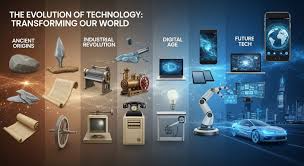
Technology is evolving faster than any other force in human history. Innovations that once felt like science fiction—artificial intelligence, self-driving cars, virtual worlds, and smart cities—are quickly becoming part of everyday life. By 2035, technology will not just support our lives; it will reshape how we work, learn, communicate, travel, and even think.
In this article, we explore the future of technology in 2035, examining how emerging trends will transform industries, societies, and human experiences across the globe.
1. Artificial Intelligence Will Be Everywhere
Artificial Intelligence (AI) is expected to be the most influential technology by 2035. Instead of being limited to chatbots or recommendation systems, AI will function as a core decision-making partner in nearly every field.
AI in Daily Life
- Personal AI assistants will manage schedules, finances, health monitoring, and household tasks.
- AI-powered homes will anticipate user needs—adjusting lighting, temperature, and security automatically.
- Conversations with AI will feel natural, emotional, and deeply personalized.
AI in Business and Industry
- AI will automate complex decision-making in finance, logistics, healthcare, and law.
- Predictive analytics will help companies prevent problems before they happen.
- Many traditional jobs will evolve, while new AI-related careers emerge.
SEO keywords: artificial intelligence future, AI in 2035, AI technology trends
2. The Rise of Smart Cities and Infrastructure
By 2035, smart cities will become the standard rather than the exception. These cities will use interconnected technology to improve efficiency, sustainability, and quality of life.
Key Features of Smart Cities
- AI-controlled traffic systems to eliminate congestion.
- Smart energy grids using renewable energy sources.
- Sensors to monitor air quality, waste management, and water usage.
- Enhanced public safety through predictive analytics.
Cities will no longer just grow—they will think, adapt, and respond in real time.
3. The Internet Will Become Immersive (Metaverse & Web 4.0)
The internet of 2035 will be fully immersive, driven by the metaverse, virtual reality (VR), and augmented reality (AR).
What Will Change?
- Virtual offices and classrooms will replace physical spaces.
- Digital avatars will represent people in social and professional environments.
- Shopping, entertainment, and tourism will happen in interactive 3D worlds.
This shift—often referred to as Web 4.0—will blend the digital and physical worlds seamlessly.
SEO keywords: metaverse future, virtual reality 2035, future of the internet
4. Healthcare Will Become Predictive and Personalized
Technology will revolutionize healthcare by making it preventive rather than reactive.
Healthcare Innovations by 2035
- Wearable devices will continuously monitor vital signs.
- AI will detect diseases years before symptoms appear.
- Personalized medicine will tailor treatments to individual DNA.
- Robotic surgery will be safer and more precise than human hands.
People will live longer, healthier lives, supported by real-time health intelligence.
5. Transportation Will Be Autonomous and Sustainable
Transportation in 2035 will be cleaner, safer, and largely autonomous.
Major Developments
- Self-driving cars will dominate roads.
- Electric vehicles (EVs) will replace gasoline-powered cars.
- Flying taxis and high-speed hyperloop systems will reduce travel time.
- AI traffic systems will drastically reduce accidents.
Commuting will become productive, relaxing, and environmentally friendly.
SEO keywords: future transportation technology, self-driving cars 2035, electric vehicles future
6. Education Will Be Fully Personalized
Traditional education systems will undergo a complete transformation.
The Classroom of 2035
- AI tutors will adapt lessons to individual learning styles.
- Virtual reality will allow students to explore history, science, and space firsthand.
- Lifelong learning will replace one-time education.
- Degrees will matter less than skills and real-world experience.
Education will become accessible, flexible, and customized for every learner.
7. Work and Jobs Will Be Redefined
The future of work will focus more on creativity, strategy, and emotional intelligence.
How Work Will Change
- Remote and hybrid work will be the global norm.
- AI will handle repetitive and analytical tasks.
- Humans will focus on innovation, leadership, and ethics.
- The gig economy and digital entrepreneurship will expand.
While some jobs will disappear, many new careers will emerge—especially in AI, sustainability, and digital services.
8. Cybersecurity and Digital Identity Will Be Critical
As technology advances, so do cyber threats. By 2035, cybersecurity will be a top global priority.
Security in the Future
- Biometric authentication will replace passwords.
- Blockchain-based digital identities will protect personal data.
- AI-driven cybersecurity systems will stop attacks in real time.
- Governments will introduce strict digital privacy laws.
Trust will become the currency of the digital world.
9. Green Technology Will Drive Sustainability
Climate change will push innovation in green and sustainable technologies.
Environmental Tech in 2035
- Carbon capture systems will reduce pollution.
- Smart agriculture will optimize food production.
- Renewable energy (solar, wind, fusion) will dominate.
- Eco-friendly materials will replace plastics.
Technology will play a crucial role in saving the planet, not harming it.
SEO keywords: green technology future, sustainable technology 2035, renewable energy future
10. Human–Technology Integration Will Increase
By 2035, the line between humans and technology will blur.
Human Enhancement Technologies
- Brain-computer interfaces will allow thought-based control.
- Advanced prosthetics will restore and enhance human abilities.
- Neural implants may improve memory and learning.
Ethical debates will grow, but these technologies will dramatically improve lives—especially for people with disabilities.
Conclusion: A Smarter, Faster, More Connected World
The future of technology in 2035 promises a world that is more intelligent, more efficient, and more interconnected than ever before. While challenges like privacy, job displacement, and ethics will remain, the opportunities for growth, innovation, and human advancement are immense.
Technology will not replace humanity—it will amplify it.
The key question is not what technology can do, but how wisely we choose to use it.
If you’d like, I can also:
- Optimize this article further for Google ranking
- Add FAQs with schema markup
- Rewrite it for a blog, Medium, or affiliate site
- Adjust tone (more technical, simpler, or more futuristic)
Just tell me 👍